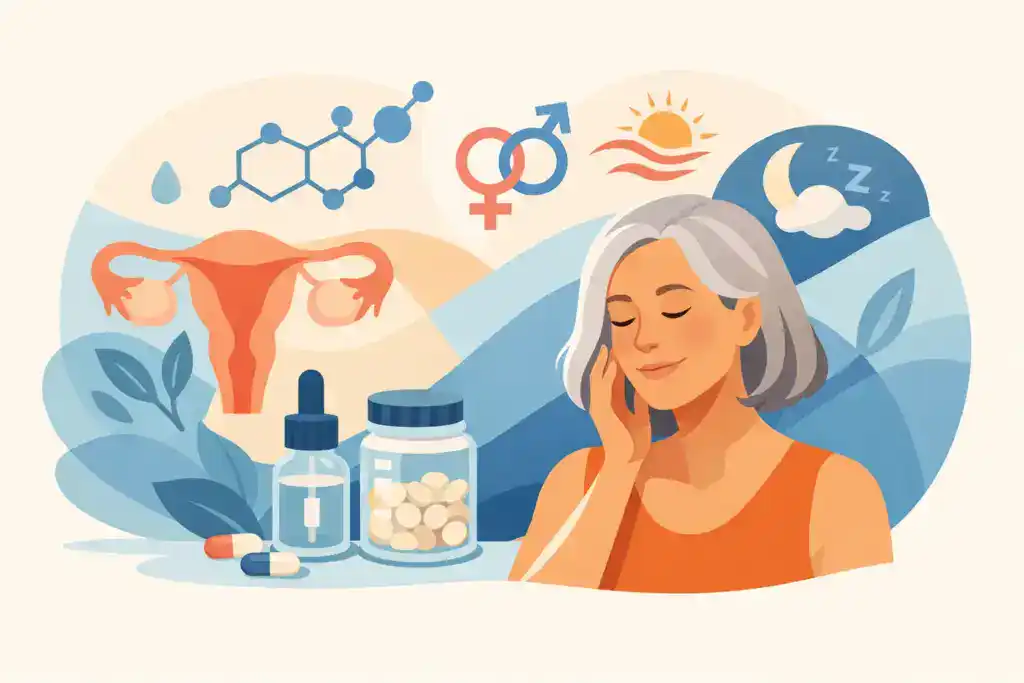
Hot flashes at 2 a.m., a shorter temper in the middle of a workday, sleep that suddenly feels fragile, skin that seems thinner, weight that shifts without explanation – menopause can feel less like one symptom and more like a full-body change. For many women, bioidentical hormones for menopause enter the conversation when those changes begin to affect confidence, energy, focus, and quality of life.
What are bioidentical hormones for menopause?
Bioidentical hormones are hormones designed to be chemically identical to the estrogen, progesterone, or testosterone the body naturally produces. In menopause care, they are used to help address symptoms linked to changing hormone levels, including hot flashes, night sweats, vaginal dryness, sleep disruption, mood changes, and sometimes reduced libido.
The term itself can be confusing because it is often used loosely. Some bioidentical hormones are FDA-approved and manufactured under standardized conditions. Others are custom-compounded. That distinction matters. Patients sometimes hear “bioidentical” and assume it automatically means safer, more natural, or more effective. Evidence-based medicine does not support those assumptions across the board.
What matters more is the specific hormone, the dose, the delivery method, and whether treatment is appropriate for your health history.
Why menopause symptoms can feel so disruptive
Estrogen does more than regulate periods. It influences temperature regulation, vaginal tissue health, bone turnover, skin quality, sleep, and even how the brain processes mood and cognition. Progesterone has effects on the uterine lining and can also influence sleep and mood. Testosterone, while present at lower levels in women than in men, may play a role in sexual desire and energy for some patients.
As hormone levels fluctuate during perimenopause and decline further after menopause, the body may respond unevenly. One woman may mainly notice intense hot flashes. Another may be more affected by brain fog, dryness, poor sleep, or a loss of resilience that is hard to describe but very real.
This is why menopause treatment should not be reduced to a trend or a one-size-fits-all prescription. Thoughtful care begins with symptom patterns, medical history, and treatment goals.
How bioidentical hormones for menopause are used
Bioidentical hormone therapy is not a single treatment. It is a category that can include estradiol, micronized progesterone, and in select cases testosterone. These may be delivered through patches, pills, gels, creams, sprays, vaginal inserts, or other formulations depending on the symptom being treated.
For example, systemic estrogen may be used when symptoms like hot flashes, night sweats, and sleep disruption are affecting daily life. Local vaginal estrogen may be more appropriate when symptoms are primarily dryness, discomfort with intimacy, or urinary irritation. Progesterone is typically added for patients who still have a uterus, because estrogen alone can increase the risk of endometrial overgrowth.
This is where precision matters. The right treatment for one patient may be unnecessary or inappropriate for another.
FDA-approved vs compounded bioidentical hormones
This is one of the most important distinctions in the conversation.
FDA-approved bioidentical hormones are regulated for consistency, purity, and dosing. Examples include certain estradiol patches, gels, and oral micronized progesterone. These are often the first place evidence-based clinicians look when hormone therapy is appropriate.
Compounded bioidentical hormones are custom-mixed by a compounding pharmacy. In some situations, compounding may be useful, such as when a patient has a specific allergy to an inactive ingredient or needs a formulation that is not commercially available. But compounded hormones are not FDA-approved, and their dosing consistency can be more variable.
Compounded therapy is sometimes marketed with promises of personalization that sound appealing. Personalization does matter, but it should be grounded in clinical judgment, not in marketing language. A physician-led plan can still be highly individualized while relying on standardized, evidence-supported medications whenever possible.
Who may be a good candidate
Many healthy women with moderate to severe menopause symptoms may be candidates for hormone therapy, especially if treatment begins within the appropriate clinical window and there are no significant contraindications. Women who are struggling with vasomotor symptoms, sleep disruption tied to night sweats, or genitourinary symptoms often see meaningful improvement.
That said, candidacy depends on more than symptoms alone. A clinician will usually review personal and family history, cardiovascular risk, history of blood clots, migraine pattern, liver health, breast cancer history, uterine status, and current medications.
For some women, hormone therapy offers substantial relief and supports a more stable sense of well-being. For others, the risk-benefit profile may point toward non-hormonal options instead. Good medicine is rarely ideological. It is tailored.
Benefits patients often notice
When hormone therapy is appropriately prescribed, benefits can be significant. Hot flashes and night sweats often improve first. Better sleep may follow, which can have a ripple effect on mood, patience, focus, and energy. Vaginal estrogen can improve dryness, irritation, and sexual discomfort. Some patients also notice positive changes in skin hydration, joint comfort, or overall quality of life, although these outcomes vary.
There are also longer-term considerations. Estrogen can help preserve bone density in some women, which becomes increasingly relevant after menopause. But hormone therapy should not be framed as a universal anti-aging solution. That oversimplifies both its potential and its limits.
A refined treatment plan respects both. It aims to relieve symptoms and support health without promising more than the evidence can deliver.
Risks and trade-offs to understand
Hormone therapy is not risk-free, and the details matter. Risks can vary depending on age, timing, dose, route of administration, and whether estrogen is used alone or with progesterone. Certain forms of hormone therapy may affect the risk of blood clots, stroke, breast cancer, or gallbladder disease in different ways.
Route matters. For example, transdermal estrogen, such as a patch, may carry a different clotting risk profile than oral estrogen in some patients. The choice between systemic and local therapy also changes the risk discussion.
This is why blanket statements are not helpful. “Hormones are dangerous” is too simplistic. “Bioidentical means safe” is too simplistic too. The more honest answer is that treatment decisions should be individualized, monitored, and revisited over time.
Should hormone levels be tested first?
Patients often ask whether blood, saliva, or urine testing can tell them exactly what they need. In most cases, menopause treatment is guided more by symptoms and clinical history than by extensive hormone testing. Hormone levels can fluctuate substantially during perimenopause, which makes one-time testing less useful than many people expect.
Saliva testing in particular is frequently promoted in ways that go beyond the evidence. While testing may be appropriate in select situations, it is usually not the cornerstone of good menopause care.
A strong evaluation focuses on how you feel, what risks you carry, what stage of menopause you are in, and what outcomes matter most to you.
The value of physician-led menopause care
Menopause care should feel measured, not rushed. A physician-led approach allows for a more disciplined review of symptoms, medical history, and treatment options, especially when hormone therapy intersects with broader concerns like sleep, body composition, sexual health, skin quality, and long-term wellness.
For women who already value subtle, natural-looking aesthetic care, this often feels like a natural extension of the same philosophy. The goal is not dramatic change. It is balance – helping you feel more like yourself again, with treatment that respects both your biology and your standards.
At a clinic such as Leo & Lucy Medical Aesthetics, that type of care is especially relevant because hormone support can be approached with the same clinical precision and personalization that informed patients expect in other physician-guided treatments.
Questions worth asking at your consultation
If you are considering hormone therapy, the quality of the consultation matters as much as the prescription. Ask what specific symptoms are being treated, whether the recommendation is FDA-approved or compounded, why that route was chosen, what risks apply to your history, and how follow-up will be handled.
You should also ask what success looks like. Menopause care is not just about starting treatment. It is about dose adjustments, symptom tracking, side effect review, and knowing when a plan should change.
The best consultations leave you better informed, not pressured.
A more balanced way to think about treatment
Bioidentical hormones for menopause can be an excellent option for the right patient, but they are not a shortcut and they are not a wellness trend. They are a medical treatment that deserves the same rigor, personalization, and ongoing oversight as any other meaningful intervention.
If menopause symptoms are affecting your sleep, your work, your relationships, or your sense of self, you do not have to dismiss that as something to simply push through. Thoughtful care begins by taking your symptoms seriously and choosing a plan that is as individualized and well considered as you are.