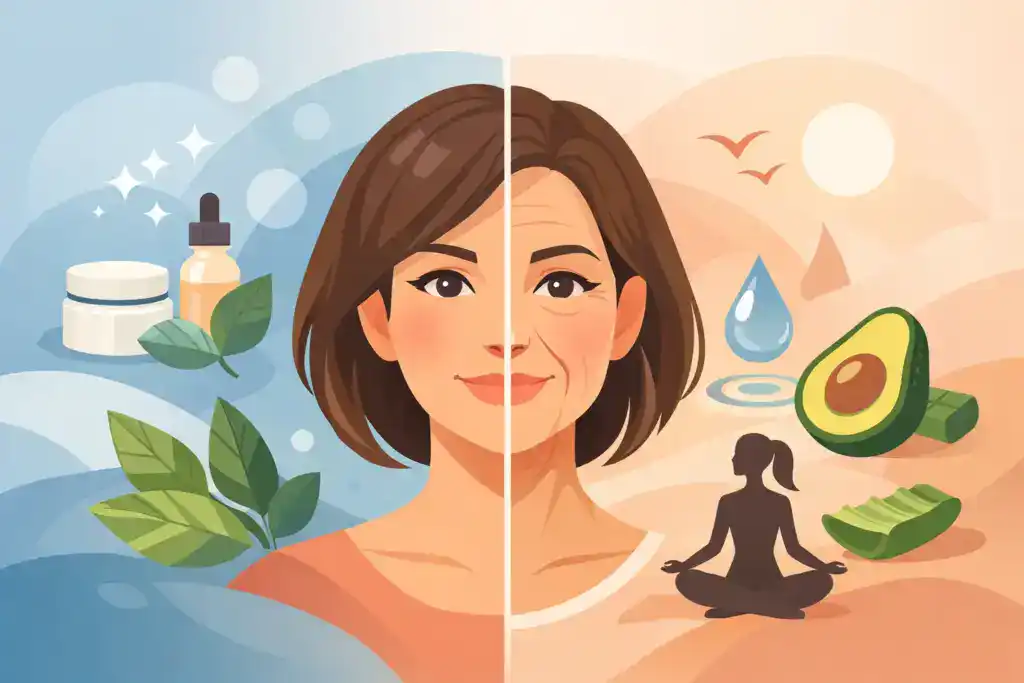
Most people are not trying to look 20 again. They want to look rested, healthy, and more like themselves on a good day. That distinction matters when you are deciding how to look younger naturally, because the best results rarely come from chasing trends or forcing dramatic change. They come from improving skin quality, preserving facial balance, and supporting the biology that influences how your face ages over time.
Natural-looking rejuvenation is less about one miracle fix and more about several smart choices working together. Skin texture, tone, hydration, facial volume, muscle movement, sleep, stress, and metabolic health all show up in the mirror. If one area is neglected, the face can read as tired even when everything else is well maintained.
How to look younger naturally starts with skin quality
If your skin looks healthy, the entire face tends to look fresher. Fine lines are less noticeable, makeup sits better, and light reflects more evenly across the skin. This is why a younger appearance is often tied more closely to skin quality than to the absence of every wrinkle.
Daily sun protection is still the most important habit. Ultraviolet exposure breaks down collagen, contributes to pigmentation, and accelerates textural changes that can make skin appear older than it is. A broad-spectrum sunscreen used consistently is not glamorous, but it is foundational.
Topical skincare also matters, although it helps to be selective. A gentle cleanser, a well-formulated moisturizer, antioxidants such as vitamin C, and a retinoid often form a strong core routine. Retinoids can improve cell turnover, support collagen production, and soften the look of fine lines over time. The trade-off is that stronger is not always better. Overuse can irritate the skin barrier, leading to dryness, redness, and a worn-looking complexion.
Professional skin treatments can make a meaningful difference when chosen carefully. Chemical peels, microneedling, laser treatments, and medical-grade facials may help improve pigment, texture, and elasticity. The right choice depends on skin tone, sensitivity, downtime tolerance, and the specific concern being treated. Natural results usually come from a measured plan rather than aggressive treatment all at once.
Facial aging is not just about wrinkles
A common mistake is treating aging as if it begins and ends with lines. In reality, the face changes in several ways at once. Bone structure remodels subtly, fat pads shift, skin loses elasticity, and muscle activity creates repetitive expression lines. That is why someone can smooth a few wrinkles and still feel they look tired.
Volume loss is often one of the biggest reasons a face appears older. Hollowing under the eyes, flattening through the cheeks, or changes around the mouth can create shadows that read as fatigue. In some cases, restoring support in a refined way creates a more natural result than chasing every crease on the surface.
This is also where restraint becomes essential. Trying to look younger naturally does not mean avoiding all treatment. It means choosing interventions that respect facial anatomy and your existing features. Subtle enhancement can be very effective when it restores balance instead of changing identity.
Movement, expression, and the “tired” look
Repeated muscle movement contributes to frown lines, crow’s feet, and forehead lines, but expression is not the enemy. A completely still face can look unnatural just as quickly as an overlined one can look aged. The goal is balance.
For some patients, strategic wrinkle-relaxing treatment is less about looking frozen and more about softening a pattern that makes them appear angry, stressed, or exhausted. Used conservatively, it can preserve expression while reducing the visual weight of certain lines. For others, better skin hydration and texture improvement may be enough to create a younger-looking result without addressing muscle movement directly.
The right approach depends on what is actually driving the concern. That is why a consultation grounded in facial anatomy is often more valuable than choosing treatment based on social media before-and-afters.
Lifestyle changes that visibly affect how young you look
A younger appearance is influenced by more than skincare. Sleep, stress, diet, exercise, and hormone health all affect inflammation, circulation, collagen support, and fluid balance. These are not abstract wellness ideas. They change how skin behaves and how the face presents day to day.
Sleep is one of the most underestimated factors. Poor sleep can worsen under-eye darkness, dullness, dehydration, and cortisol-related inflammation. Even a strong skincare routine cannot fully compensate for chronic sleep disruption.
Nutrition also shows up in the skin. Diets built around adequate protein, healthy fats, fiber, and micronutrient-rich foods tend to support better skin function than highly processed, high-sugar patterns. Collagen decline is natural with age, but the body still relies on basic nutritional building blocks to repair and maintain tissue. Hydration matters too, though it is often overstated. Drinking water will not erase wrinkles, but dehydration can make skin look flatter and less vibrant.
Strength training and regular exercise can also support a younger appearance in indirect but meaningful ways. They improve circulation, support metabolic health, preserve muscle tone, and often contribute to better posture and energy. A strong, healthy body changes how a person carries their face as much as how they carry themselves.
Stress management deserves a place in this conversation as well. Chronic stress can affect sleep, skin inflammation, hormonal balance, and even habitual facial tension. Some people hold stress in the jaw, brow, or neck, which can subtly harden the face over time. Looking younger naturally often involves looking less strained.
The features people notice first
When patients say they want to look refreshed, they are often reacting to a few highly visible areas. The under-eyes, the cheeks, the jawline, the skin around the mouth, and overall skin tone tend to have the strongest effect.
Under-eye concerns are especially nuanced. Darkness may come from pigment, shadowing, thin skin, volume loss, or visible vessels. Puffiness may be fluid, fat pad prominence, or both. Treating this area well requires precision because what works for one person can make another person look worse.
The lower face also matters. Early jowling, marionette lines, or loss of definition along the jaw can create an older appearance even when the upper face still looks youthful. In some cases, improving structural support higher in the face softens the lower face indirectly. This is why isolated treatment is not always the most natural option.
How to look younger naturally without looking overdone
The fear of looking overdone is reasonable. Patients are more informed than ever, and they have seen what happens when treatment is excessive, poorly planned, or disconnected from anatomy. Looking younger naturally requires a philosophy as much as a technique.
First, prioritize skin health before chasing perfection. Brighter, smoother, more even skin usually reads as youthful faster than trying to erase every line. Second, treat the cause, not just the symptom. A fold caused by volume loss is different from a line caused by movement or a rough texture caused by sun damage. Third, think in maintenance, not rescue. Smaller, well-timed treatments often create a more believable result than waiting until everything feels urgent.
A physician-led, evidence-based plan is particularly valuable when concerns overlap. Facial aging is rarely one-dimensional, and a personalized approach can help avoid the common pattern of doing too much in the wrong place while ignoring the issue that actually matters most.
At Leo & Lucy Medical Aesthetics, that principle of refinement over excess is central to natural-looking care. The most credible rejuvenation work rarely announces itself. It simply makes someone look healthier, more balanced, and more rested.
When natural strategies need professional support
There is a point where excellent lifestyle habits and skincare may still not fully address what you see in the mirror. That is not failure. It is biology. Collagen loss, facial volume changes, hormonal shifts, and cumulative sun exposure continue over time.
Professional care can complement natural habits rather than replace them. The key is choosing treatments with realistic expectations and subtle goals. Not every patient needs injectables. Not every patient needs laser. Some need a skin-focused plan, some benefit from facial balancing, and some should first address sleep, weight stability, or hormone-related concerns because those drivers are showing up in the face.
The most natural outcome usually comes from respecting timing. If you address concerns early and thoughtfully, you can often maintain a fresher appearance without obvious change. Waiting until the face looks significantly depleted can still be treated well, but it may require a more layered plan.
A younger-looking face is rarely created by one product, one procedure, or one perfect habit. It is built through consistency, restraint, and an honest understanding of what your face actually needs. If you focus on skin quality, facial balance, and overall health, the result tends to look less like you had something done and more like you simply look well cared for.