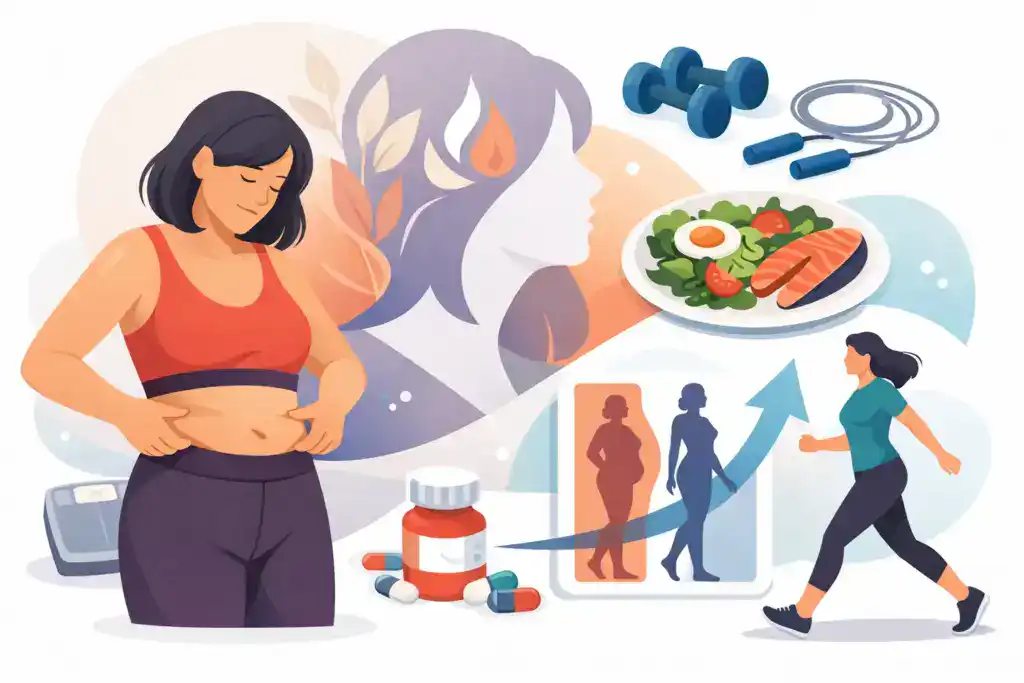
That shift often feels unfair. You may be eating much the same way, staying reasonably active, and still noticing a thicker waistline, slower progress, and a body that no longer responds the way it did a few years ago. Menopause weight gain treatment needs to account for those biological changes rather than treating midlife weight gain like a simple willpower problem.
For many women, the issue is not one single cause. Estrogen changes affect fat distribution, muscle mass tends to decline with age, sleep becomes lighter, stress hormones may run higher, and insulin sensitivity can worsen. Add a busy professional life, family demands, and less time to recover well, and the result is a pattern that feels stubborn for very real medical reasons.
Why menopause changes body composition
Menopause does more than alter the number on the scale. It often changes where weight is stored. Many women notice more abdominal fat even if their total weight has not risen dramatically. That central weight gain matters because it can affect not only clothing fit and confidence, but also long-term cardiometabolic health.
Estrogen plays a role in how the body regulates fat storage, appetite, and insulin response. As estrogen declines, the body often shifts toward storing more fat around the midsection. At the same time, age-related muscle loss reduces resting metabolic rate. In practical terms, that means the body may burn fewer calories at rest than it once did.
Sleep disruption also deserves more attention than it usually gets. Night sweats, frequent waking, and lighter sleep can affect hunger hormones and energy regulation. When sleep is poor, cravings tend to rise, workouts feel harder, and recovery suffers. A woman can be doing many things right and still feel like her body is working against her.
What effective menopause weight gain treatment should include
The most effective approach is rarely a crash diet or an intense short-term fitness plan. Menopause weight gain treatment works best when it is personalized, medically informed, and focused on improving body composition rather than chasing rapid scale changes.
A good treatment plan usually starts with assessment. That may include reviewing symptoms, medication history, sleep quality, stress load, eating patterns, exercise habits, and metabolic markers. In some cases, hormone status, thyroid function, insulin resistance, or other underlying contributors should be evaluated before a plan is built.
From there, treatment often involves several coordinated pieces.
Nutrition that supports muscle and metabolic health
During menopause, overly restrictive dieting can backfire. It may increase fatigue, reduce lean muscle, and make rebound weight gain more likely. A more effective strategy is structured nutrition with enough protein, steady blood sugar support, and calorie control that is realistic enough to sustain.
Protein becomes especially important because it helps preserve muscle during weight loss. Fiber matters as well, both for fullness and metabolic health. Many women also benefit from a closer look at alcohol intake, liquid calories, and the gradual increase in portion sizes that can happen without much notice over time.
This does not mean every patient needs the same meal plan. Some do well with a Mediterranean-style approach. Others need more support around emotional eating, inconsistent meals, or hidden calorie density in otherwise healthy foods. The right plan is the one a patient can follow consistently while still living a full life.
Strength training, not just more cardio
Many women try to out-exercise menopause weight gain with longer cardio sessions. Cardio has value for heart health and calorie expenditure, but on its own it may not address the deeper problem of muscle loss. Resistance training is one of the most important tools available during this stage of life.
Building or preserving lean mass helps support insulin sensitivity, physical function, posture, and resting metabolism. It also tends to create a firmer, more balanced silhouette, which is often what patients are really seeking. That said, intensity should match the individual. A sustainable program performed two to four times a week is often more effective than an overly ambitious routine that lasts ten days.
Sleep and stress regulation
This part is frequently underestimated because it does not feel as direct as diet or exercise. Yet for many women, sleep disruption is one of the hidden drivers of weight gain. Poor sleep can increase hunger, lower satiety, reduce exercise performance, and raise the appeal of convenient high-calorie foods.
Stress has a similar effect. A chronically elevated stress load may influence appetite and make abdominal weight gain more likely. In clinical practice, this means treatment should address the full picture. If sleep is fragmented and stress is constant, expecting nutrition alone to solve the issue is rarely realistic.
When hormones may be part of the solution
Hormone changes are central to menopause, but hormone therapy is not a universal answer for weight loss. This is where nuance matters. For the right patient, physician-guided hormone support may improve symptoms such as sleep disruption, hot flashes, mood changes, and fatigue. When those symptoms improve, adherence to exercise, nutrition, and recovery often improves too.
Some women also notice better body composition support when hormones are optimized, but hormone therapy should not be presented as a stand-alone fat-loss treatment. Its role depends on symptoms, medical history, risk profile, and treatment goals. The decision should be made with proper medical oversight, not generalized advice pulled from social media.
A physician-led clinic can evaluate whether hormone support fits into a broader metabolic and wellness plan. That level of oversight matters because midlife weight changes can overlap with thyroid issues, insulin resistance, medication effects, and other medical concerns that deserve careful review.
Medical weight loss during menopause
For some patients, lifestyle changes alone are not enough, especially if weight has been steadily increasing despite a reasonable effort. In those cases, medical weight loss may be appropriate.
This can include prescription therapies, body composition tracking, structured nutrition guidance, and ongoing follow-up. The purpose is not to push aggressive transformation. It is to support measurable, medically appropriate progress with a plan that respects the biology of menopause.
Medication can be helpful, but it is not the right fit for everyone. Some patients are excellent candidates and benefit from reduced appetite, improved adherence, and better momentum. Others may do better focusing on hormone optimization, sleep treatment, resistance training, and nutrition coaching first. The best results usually come from pairing medical tools with behavior change, not replacing one with the other.
At a physician-led clinic such as Leo & Lucy Medical Aesthetics, this kind of care is strongest when it is personalized. A refined treatment plan should consider not only the amount of weight lost, but also how a patient feels, how sustainable the process is, and whether the result supports long-term health and confidence.
Why quick fixes usually fail
Menopause can create urgency. Clothes fit differently, the face may look more tired, and the body can seem less familiar. That urgency makes extreme plans tempting, but most fail because they are mismatched to the physiology of midlife.
Very low-calorie diets can worsen fatigue and make muscle loss more likely. Endless cardio can increase stress without preserving strength. Trend supplements often promise hormonal balance with very little evidence behind them. Even when these approaches produce short-term change, they are often difficult to maintain and can leave patients more frustrated than before.
A better standard is steady progress with medical credibility behind it. That may mean slower early weight loss, but stronger long-term outcomes. In this stage of life, the goal is not punishment. It is balance.
What to look for in a treatment plan
If you are considering menopause weight gain treatment, look for a plan that treats you as an individual rather than a formula. It should consider symptoms, lab work when appropriate, body composition, lifestyle constraints, and your actual goals. Some women want significant weight reduction. Others want to reduce abdominal fat, preserve muscle, and feel more like themselves again. Those are not identical goals, and they should not be treated the same way.
You should also expect honesty. There is no single intervention that reverses every effect of menopause. Some patients respond quickly. Others need a period of adjustment before the right combination becomes clear. Good care acknowledges that reality while still offering a structured path forward.
The most encouraging truth is that this phase is treatable. Not perfectly, not instantly, but meaningfully. With evidence-based medicine, physician oversight, and a personalized strategy, progress is absolutely possible. The body may be changing, but it is not beyond help, and it is not beyond understanding.